Blog Widget by LinkWithin
Showing posts with label reading. Show all posts

Saturday, February 6, 2010

Environment

A learning environment is one of the most essential ingredients in the successful home school.

  • There must be bins of finger paint, construction paper, pop bottles, scissors, popsicle sticks and other craft/science project tools. These supplies will be used to create volcanoes, snowflakes, picture books, bridges, dinosaurs, light sabers and bird houses.


  • Invest in good wall maps, globes and atlas'. You The children will wear them out with their greasy little fingers. National Geographic and Rand McNally both make wonderful and affordable maps. This one hangs in my son's room and is especially perspective changing.

  • A home computer with good parental controls is a vital part of our home school. We use the internet to answer questions, find examples and facilitate learning. There are some amazing people out there who have made animations of Bernoulli's Principle, the Wright Brother's Flight, and weather patterns , just to name a few, that make learning come to life.

  • The Library

  • A stocked book shelf (shelves, eventually) is the core of our learning environment. I have found that if I have a variety of good books on the shelf, they will be read. My eleven year old son regularly reads 500 + page books. When he needs a new book at 10 o'clock at night, he just needs to walk into the living room. I'll cock five or six books which he might enjoy and give brief explanations as I go. From them, he'll choose his next read. We have the Childcraft books, Young Scientist Encyclopedias, Time-Life Books and other references. The rule we came up with picture books is that if we check them out from the library more than once, they need to be owned. I buy books from thrift stores, library sales and yard sales. Most often, though, because you can't rely on those other sources to have the specific book you need, when you need it, I go to the internet. http://www.abebooks.com/ has the best prices--often for less than $5. Amazon can also have good prices. (A word of warning about buying used books: buy only very good, like new or new quality or else you'll find yourself with a book that is falling apart and not worth the $2 you saved.)

Even if you don't hold school every day, within this rich environment, one can't help but learn.

Read more...

Monday, January 25, 2010

Young People's Book Club


Not long after a few friends and I started a book club, my son, then eight, wanted a book club of his own. Being a literature lover, I jumped at the idea.


A book club for little kids can be tricky. You can't just sit around a table draped in a lovely embroidered cloth and discuss words in some sort of highbrow way--when you are eight. I wanted it to be a fun experience where we proved that reading and then talking about books is delightful and even looked forward to. Mine are the only regular attendees who are home schooled (though we've had a few others come and go). All of the others go to public school. This provides a good mix of children, ideas and book exposure. We had been inviting the younger friends as they began reading better, but recently concluded that the age range was too broad. After a great deal of experimenting, we've discovered the following:

  • Eight is generally the youngest they are able to participate in a discussion with any kind of flow. Before that age, we get lots of stories about their lost tooth, a Sponge Bob episode, and what they ate for lunch.
  • By the time they are eleven, they are ready for the next level--less parental involvement, more serious discussion.

  • We always discuss the book for at least fifteen minutes, but have gone as long as forty. The idea is to get them wanting more from a book than just turning pages and filling time. Think a little deeper, wonder a little more.

  • Since we meet after school, a snack is required. I've always made our food mesh in some way with the book. It has made for a great variety and the kids like to speculate about what food I'll come up with.

  • A game is the third leg of our formula. Actually, it's often several games, but they too, like the refreshment, relate to the book. Considering their ages, it's usually a moving game.

  • One hour and fifteen minutes is the magic time allotted. It's almost always when we're wrapping up--and my sanity begins to unravel.

Here is our list:

  • Caddie Woodlawn

  • The Hobbit (We ate bacon, biscuits with honey butter and drank herbal tea.)

  • Charlie and the Chocolate Factory (Tasted both cabbage soup and chocolates.)

  • Harry Potter (Had fun naming regular candies Potterish names. We also learned some magic.)

  • Island of the Blue Dolphin

  • Where the Red Fern Grows

  • My Side of the Mountain (We continued our meeting a few days after book club when we went to visit a man who raised hunting falcons.)

  • Holes

  • Mrs. Frisby and the Rats of NIMH

  • Among the Hidden (Most of our kids come from large families, so we had some good discussion about what a limit of two children per family would personally change our lives.)

  • Johnny Tremain

  • The Mixed-up Files of Mrs. Basil E Frankweiler (Since they were hiding out in the museum and part of the plot included a statue, we carved our own out of soap.)

  • Fablehaven (Our best, and longest, discussion by far.)

  • The Best Christmas Pageant Ever

  • All of the Nate the Great Books (Pancakes, obviously.)

  • Whittington (Worst discussion, best games.)

  • Sarah, Plain and Tall

After three years, my son, now eleven, has started his own book club. He doesn't want me to be in charge or even in the room. He wants it to be their book club, their insights, their questions. I am delighted. Give it a try and have fun broadening the reading experience for those you educate.

Read more...

Sunday, January 10, 2010

Where To Start

My Dear Friends,

This post has been a long time in coming. Yet another friend has asked the question, "Where do I start?" This question will not go unanswered any longer.

First, you must know that home schooling is difficult. Mom has to be on the ball all of the time. Just that sentence is heavy because we are also responsible for their spiritual development, their grasp of table manners, and keeping them in clean clothes. I wouldn’t do it if I didn’t see the benefits. I said, I wouldn't do it if I didn't see the benefits. You can do it if your husband isn't on board, but I would not recommend it. You will discover that you must defend your decision to your dad, your grandmother, your neighbor, the lady on the park bench, your pharmacist, the stranger at the gym, the librarian, the post man, and practically everyone to whom your child says, "I'm home schooled." Or to anyone who wonders why your children are at Walmart in the middle of a school day. Or to, well, everyone. Get ready for that. Be ready to have thick skin when someone says, "WHAT?? You're crazy!" or "Honestly, how could you do that to your daughter?" or "I'd kill my kids if they were around all the time." I promise, you will need your husband on your side. Additionally, I've yet to see an effective home school where Dad was absent--not that it can't be done, I've just never seen it. You'll also need him to be understanding of having maps and penmanship posters on your living room wall, Spanish language tapes playing in the car, and science experiments growing in the kitchen window.

So, where do you start? In my opinion, go straight to the classics. Do not waste your time on self-help books; this includes the plethora of "why public school sucks" books. There are some that come highly recommended, but wait on those until you have a sound background in the classics. You may be surprised how lame those books become when compared to A Tale of Two Cities, Little Women, and Swiss Family Robinson. Anyone who is reading a classic with the awareness of her responsibility of teacher/mom will find what they need within those time-honored pages. Plus, they are more fun. There is a captivating story to lead you through the "How do I teach responsibility to my seven year old?" instead of a generalized list that someone wrote about how all seven year olds operate. Please. Like any child–even those in the same family–learns the same way, at the same rate.

The two most important educational/parenting resources, in my experience, are the scriptures (including the Ensign) and the Holy Ghost. I have read a few self-help books. One of them was an assignment. The sassy way I took notes was to write a scriptural passage in the margin to illustrate how the prophets taught the same principle in a better and Christ-centered way.

Back to the classics for a minute. It isn’t enough to just read the books, we must also write about them, muse over them, discuss what you are learning with your spouse and your children. I have done the discussion part from the beginning (mostly because I can’t shut-up about anything) and it is paying off in a big way. Now, my children will be reading from a book and will race into the kitchen to tell me, "MOM!! Do you know what just happened??!!" and then will go on the explain the reason for their strong emotion. This is the Newborn Smile of home schooling. Thrilling.

I'm only going to refer you to one resource with which to begin. It is called A Thomas Jefferson Education by Oliver DeMille. It is a complete paradigm shift in what you think about educating children. Buy it, get it from the library, borrow it from me, whatever. You must read this book. There are hundreds of home schooling philosophies. This is the one that speaks to my husband and me. Wherever you decide to school your children, you need to read this book.


This is, like anything that is hard, a rewarding job. Think about how much you will learn, not just the kids. When I try to explain how I’ve changed since I started TJEd, I just say I feel bigger–fleshed out. I have so so so much to learn, but it is a great ride.

Good luck. Feel free to ask me questions. I'm always thrilled to talk about home school.

The MotherShip

Read more...

Thursday, November 12, 2009

Writing Inspired by Aesop

I like Aesop's Fables. I like the length (short) and the palpability of the message. So many of the fables are still completely viable in our modern society. I have used Aesop's Fables in my parenting and today decided to use it in our home school.


This is the version we own:
It's paintings are beautiful and old fashioned, but there aren't so many pictures that the children aren't allowed to use their imaginations.
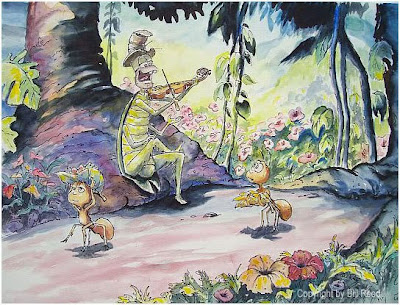
I chose several of the most well-known parables and read them aloud to the children.


  • The North Wind and the Sun


  • The Ants and the Grasshopper


  • The Lion and the Mouse


  • The Shepherd Boy and the Wolf


  • The Town Mouse and the Country Mouse


  • The Crow and the Pitcher


  • The Goose and the Golden Egg

We discussed each story, it's moral lesson and it's modern application. Then came the assignment: Write an updated version of one of the parables we discussed.

One story told of a child who played instead of cleaning her room. She then bore the consequence of playing while it was time to work.

One was about a big sister with a wonderful racing bike and a toddler with a tricycle.

Another piece told about a man, deeply in debt, who lost it all through his incessant greed.
Not only did we read, discuss and learn from Aesop's timeless fables, we also integrated their lessons into our lives.

And it got the children writing.

Read more...

Tuesday, October 6, 2009

Family Read Aloud Novels

Since nursing my oldest to sleep quit being an option, I started reading my pods to sleep each night. The time they stop nursing is also about the time they move out of the crib, under my roof, so it makes for a comfortable cuddle-and-read. Until my oldest was five, we always read picture books. I, like you, have several memorized, such as:A super favorite of mine andbecause no one can beat Seuss for goofy made-up-words rhyming. Also

because I made up a tune for the I'll love you forever, I'll like you for always part which felt like a lullaby--and because it made me cry some nights.

When my son was five, something changed in our family. We decided to home school. The very first thing we implemented in our home school curriculum was the reading of classics as a family. I tucked in our three and five year old, turned out the bedroom light, turned on the hall light, sat in the door frame, and began reading,

“Where’s Papa going with that ax?” said Fern to her mother as they were setting the table for breakfast.

“Out to the hoghouse,” replied Mrs. Arable. “Some pigs were born last
night.”

“I don’t see why he needs an ax,” continued Fern, who was only eight.

“Well,” said her mother, “one of the pigs is a runt. It’s very small and weak, and it will never amount to anything. So your father has decided to do away with it.”

They were captivated; I was captivated. After several nights, I knew this would be an integral part of our home education.

In honor of October, dark evenings and cool temperatures (because it is hard to get any of us to settle down to listen to a book when it light and hot at 9:30 pm), I want to refer you to some of our favorites. But first, a few rules:

  1. Make sure everyone has done all of their evening routine such as brushing teeth, getting a drink, putting the bike in the garage and saying goodnight to the pet.
  2. Children have to stay laying down--if a head pops up, I stop reading. The commotion makes it hard for the others to hear and if they sit up, soon their feet are hanging down, and then they are on your lap or playing with toys.
  3. Read, don't talk too much. You know your children. You know whether they understood that last paragraph or word. If they didn't, give a brief explanation and get back to reading. DO NOT use this time to preach, teach or discuss. Preaching, teaching and discussion are necessary parts of active reading, but save that for the next day or the end of the chapter. In-depth philosophising detracts from the flow of the story.
  4. Choose carefully which questions you answer. Suspense is half of why books are better than their motion picture counterparts. Sometimes you have to wait ten whole pages to find out the answer to your question. Again, try not to stop the flow the author so carefully established.
  5. Make your reading time match the attention span of your listeners. If they can only listen for five minutes, don't force them to listen for ten. You don't want them to hate this. Don't worry if you don't read for long at the beginning. After so much listening practice, I'm usually the one to plead to stop because my voice starts to give out after an hour.
  6. If no one likes the book you chose, quit. It's okay if everyone else in the world loves it. There are too many wonderful books to spend your time on crappy ones. Having said this, make sure you give it a good chance. I have a fifty page rule; give the author at least fifty pages to warm up. You might just need to wait a few years and try again when your children are older.

Now, put on the flannel, turn down the light, dispense with last minute potty breaks and enjoy any of these family reads.

Charlotte's Web by EB White (Always, always start with this.)
Stuart Little by EB White
The Cricket in Times Square by George Selden
Little House in the Big Woods by Laura Ingalls Wilder *series*
The Best Christmas Pageant Ever by Barbara Robinson
The Lion, The Witch and the Wardrobe by CS Lewis *series*
Charlie and the Chocolate Factory by Roald Dahl
Island of the Blue Dolphins by Scott O'Dell
Hatchet by Gary Paulsen *series*
Caddie Woodlawn by Carol Ryrie Brink
Ramona the Pest by Beverly Cleary
Johnny Tremain by Esther Forbes
Where the Red Fern Grows by Wilson Rawls
From the Mixed-up Files of Mrs. Basil E Frankweiler by EL Konigsburg
Harry Potter by JK Rowling *series*
Mrs. Frisby and the Rats of NIMH by Robert C O'Brien
Mrs. Piggle-Wiggle by Betty MacDonald *series*
The Mouse and the Motorcycle by Beverly Cleary *series*
The Indian in the Cupboard by Lynne Reid Banks
The Tale of Despereaux by Kate DiCamillo
Among the Hidden by Margaret Peterson Haddix *series*
Little Britches by Ralph Moody *series*
Holes by Louis Sachar
My Side of the Mountain by Jean Craighead George
Peter Pan by JM Barrie
Fablehaven by Brandon Mull
The Great Brain by John Dennis Fitzgerald *series*

This is by no means a complete list, but hopefully it will get you started or give you a few new ideas. There are many, many great books for this age that I think are too difficult to read aloud (The Secret Garden and Huckleberry Finn, for example).

Good luck and enjoy the quiet unity of reading the same story at the same time.

Read more...

About This Blog

  © Free Blogger Templates Blogger Theme II by Ourblogtemplates.com 2008

Back to TOP